Landscaping in Dexter, built for this ground.
Design and planting for Dexter, where Mill Creek, the Huron River and fast-graded subdivisions all put water where you did not want it.
It is almost always the soil, not the plant.
Dig a hole in clay, drop in a nursery plant with its light potting mix, and backfill around it, and you have built a bucket that fills with water and does not drain.
Dexter sits where Mill Creek meets the Huron River, and the low ground near both holds water. The newer subdivisions were graded fast onto clay subsoil with a thin layer of topsoil dropped on top.
That thin topsoil layer is the recurring problem in the newer areas. Grass roots hit compacted clay a few inches down and stop, so the lawn burns off in the first dry stretch of summer no matter how much you water it. The fix is soil, not irrigation.
The plant drowns slowly over two seasons and everyone blames the plant. The fix is unglamorous: break the sides of the hole, amend a wide area rather than a narrow one, set the crown slightly high, and choose species that tolerate wet feet where the ground stays wet.
- Beds amended wide, not just the planting hole, so roots can leave the clay.
- Crowns set slightly high so water moves away from the stem instead of pooling.
- Species matched to the spot wet, dry, deep shade or full afternoon sun.
- Edges cut and defined so beds hold their shape without plastic edging.
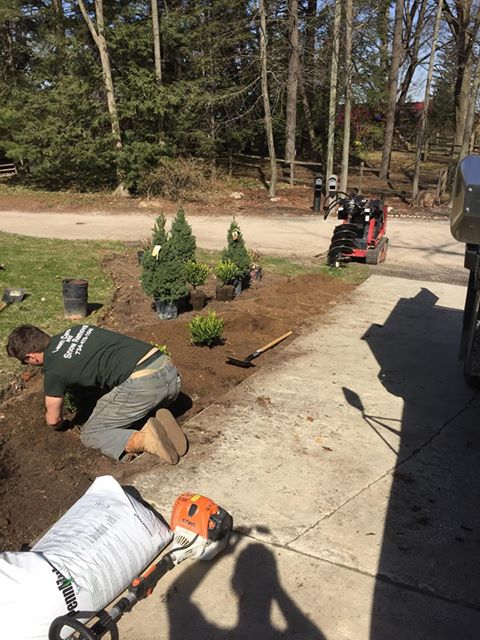
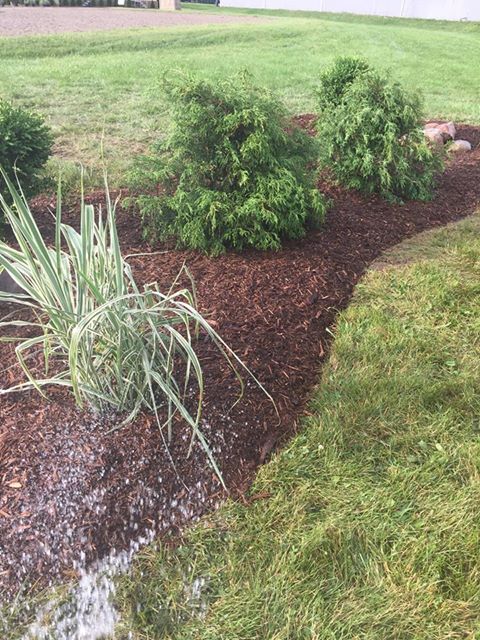
Three inches of topsoil on compacted clay
Walk a newer Dexter subdivision lot with a spade and you will usually hit compacted clay two or three inches down. The builder graded with heavy equipment, spread a thin skin of topsoil and seeded it, and that is what your plants are trying to live in.
Roots reach that compacted layer and stop. In a wet spring the bed sits in water because nothing drains through, and in a dry July it bakes because there is no depth to hold moisture. The same bed can drown and then die of drought in one season.
The fix is depth, not fertilizer. We break the compacted layer, bring in real soil and build the bed up so roots have somewhere to go. It costs more than mulching over the problem and it is the only version that lasts.
- Beds amended wide, not just the planting hole, so roots can leave the clay.
- Crowns set slightly high so water moves away from the stem instead of pooling.
- Local knowledge, we work Dexter every week, not once a season.
- Straight answers, including when the honest answer is do not spend the money.
Landscaping across Dexter
In Dexter the plant list is the last decision, not the first. Water and topsoil depth decide what is possible before anything is chosen.
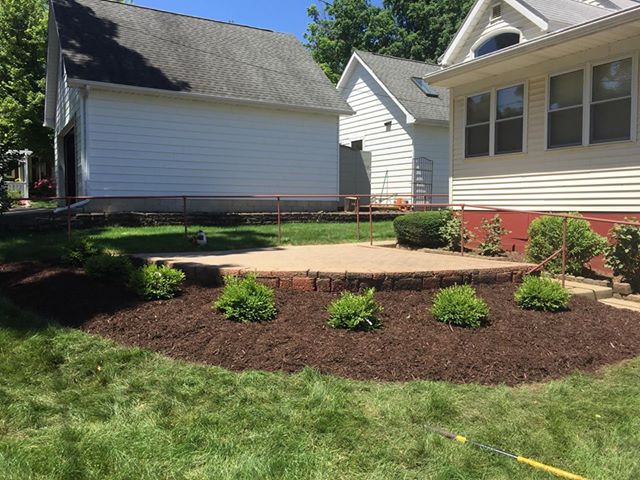
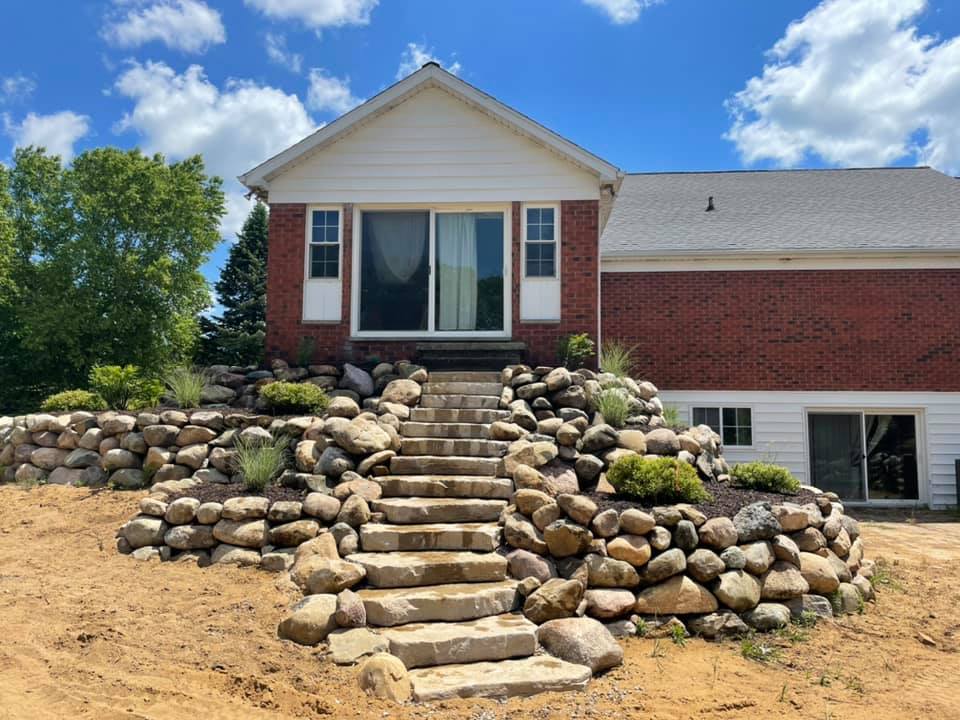
The beds that set the front of the house. Layered for year-round structure so it does not go flat in November.
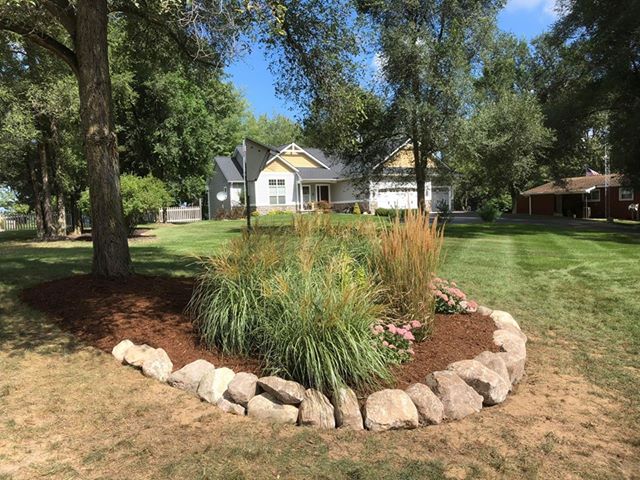
Freestanding beds with boulder or cut edging, grasses and perennials that hold their shape through winter.
Planted at the right depth, staked only when genuinely needed, mulched back off the trunk.
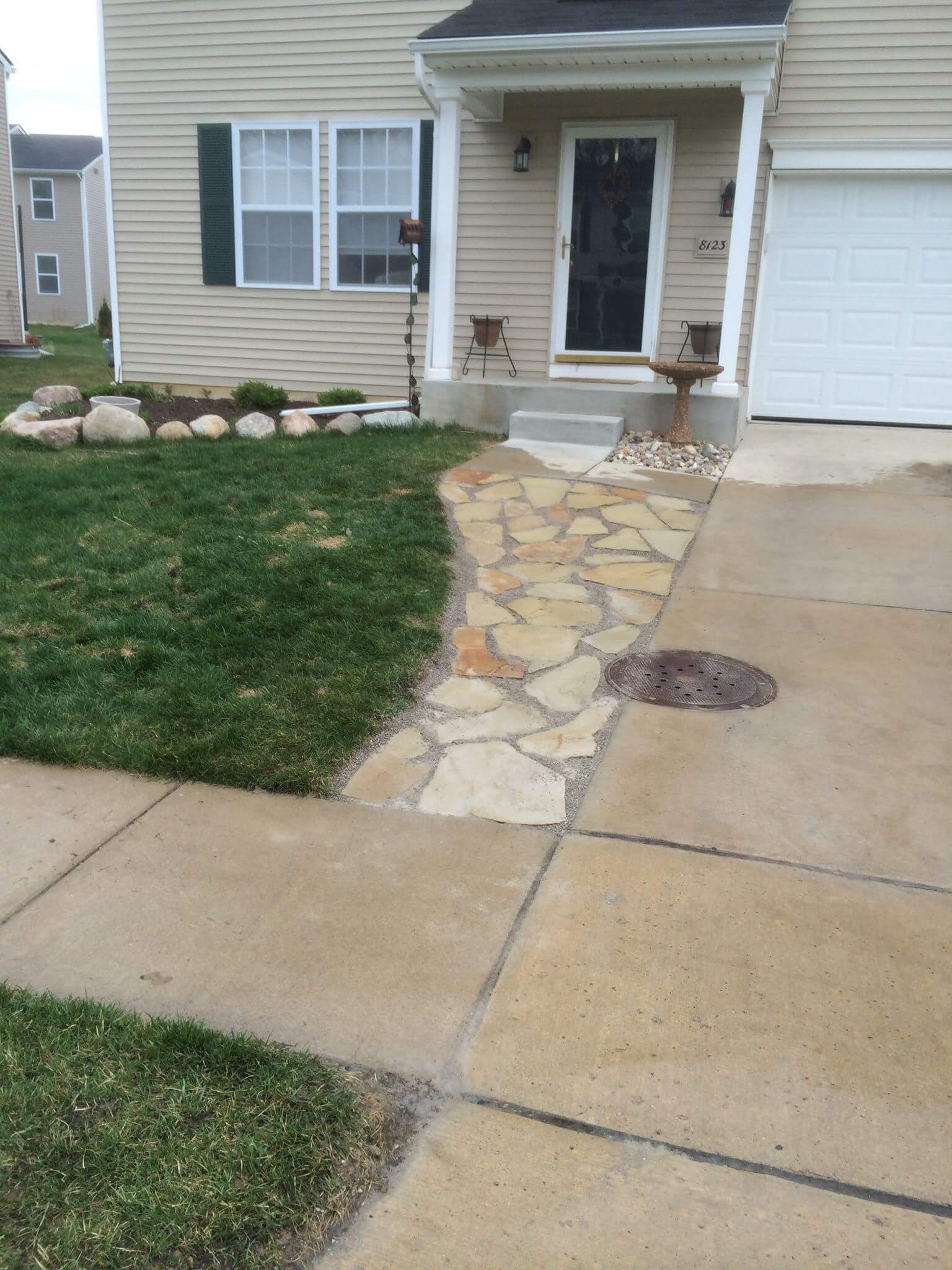
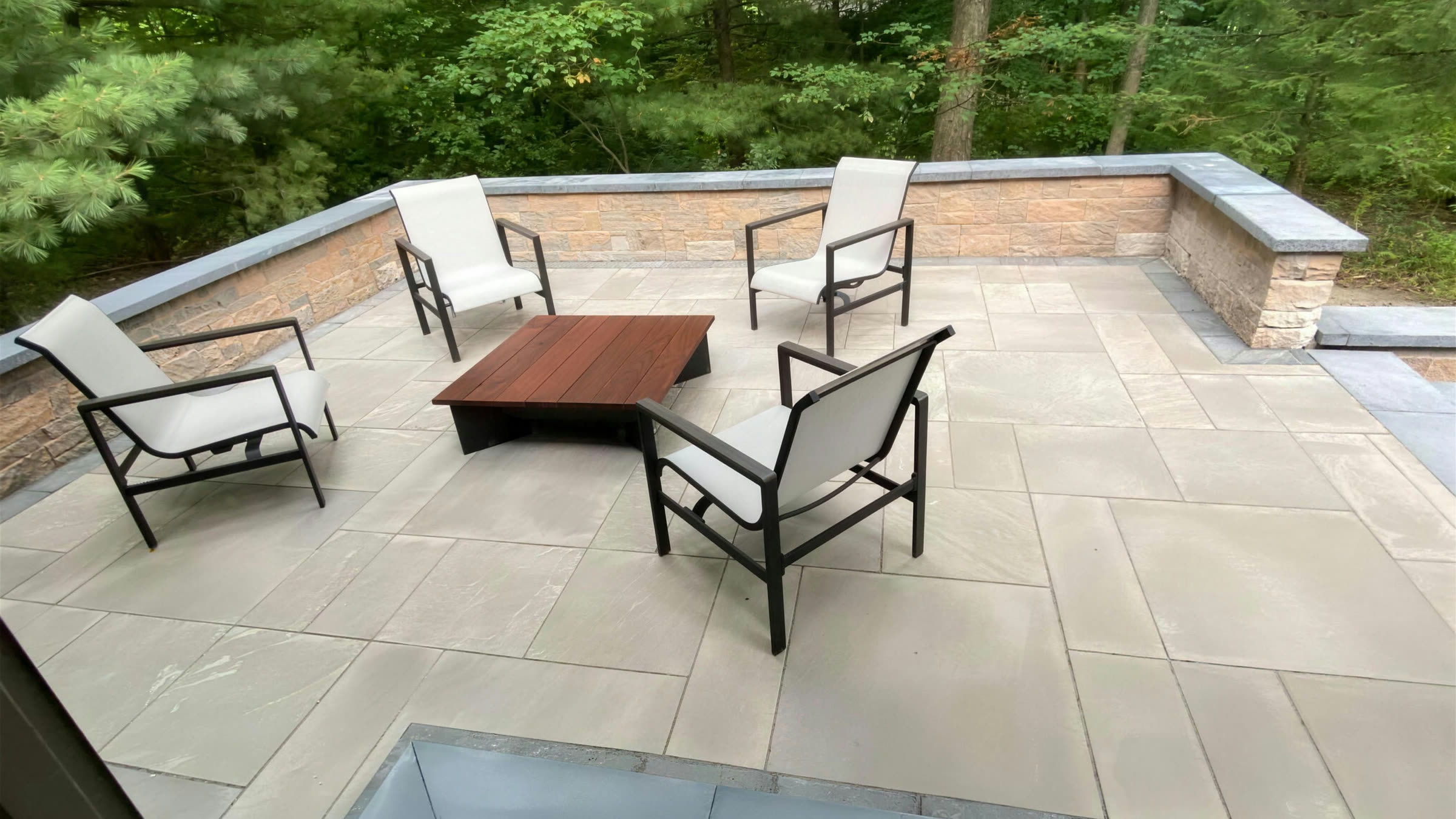
Flagstone and paver paths that connect the space and give the planting something to sit against.
What the work looks like around Dexter
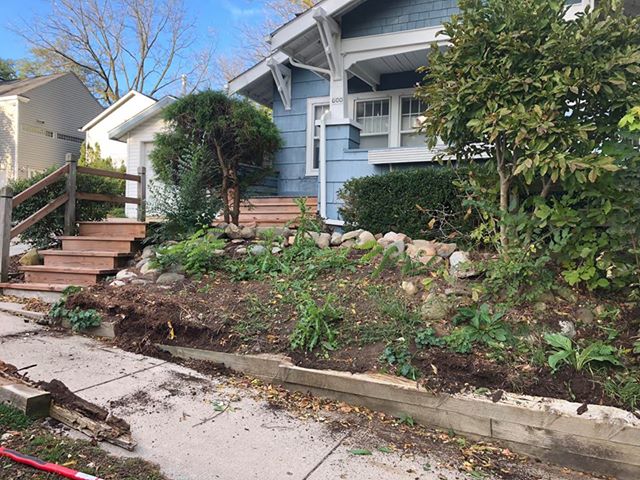
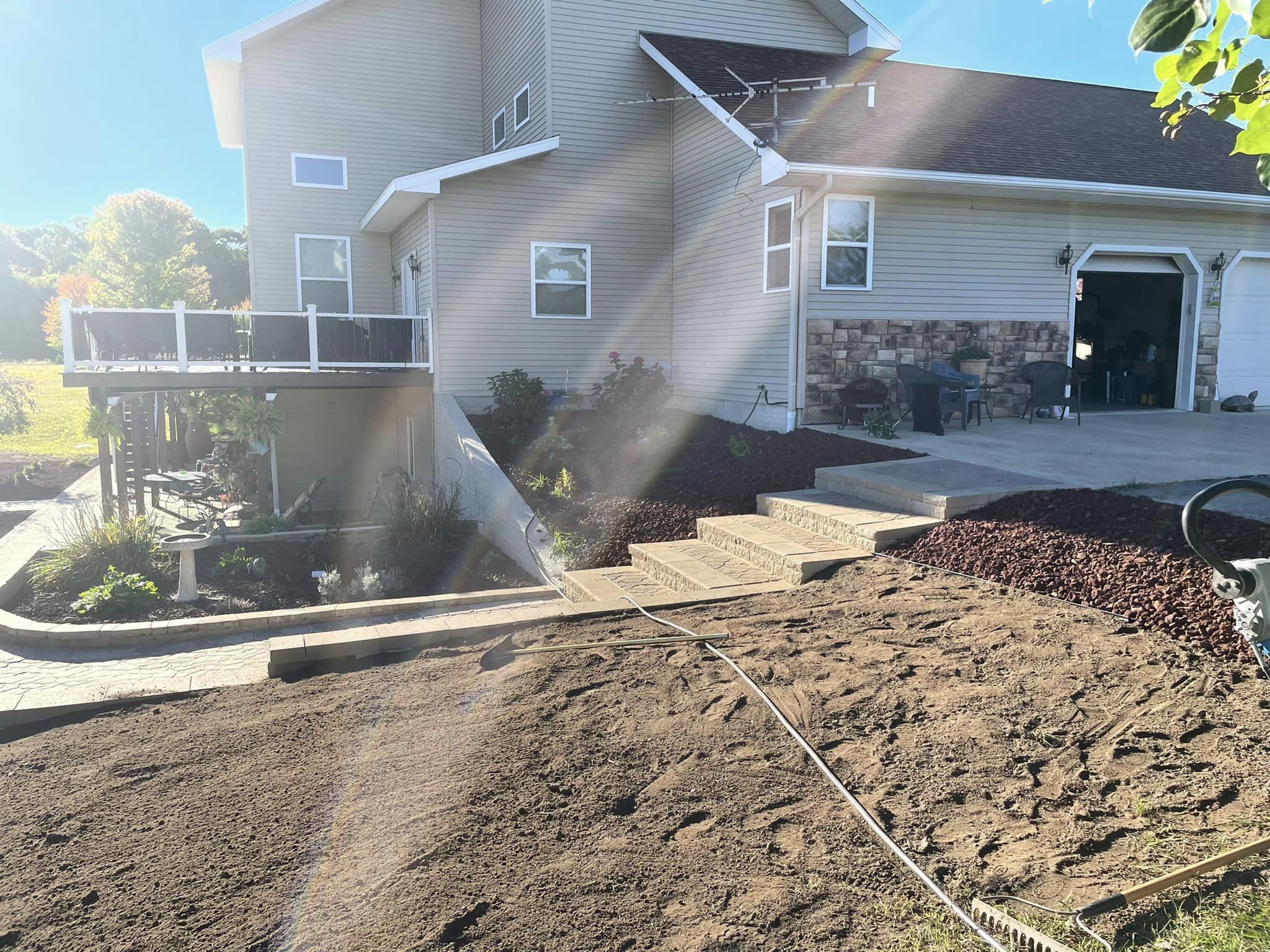
Landscaping on properties with the same river-valley ground with compacted clay subsoil.
Four steps, no surprises
We walk the property
Where water sits, where the sun actually lands, what the soil is, and what you want the space to do.
Design & written quote
A plant plan with real species names and a firm number, before anything goes in the ground.
Soil first, then plants
Beds shaped, amended and graded, then planting, then mulch. Skipping the first part is why plantings fail.
Walkthrough & care notes
What is planted, what it does in three years, and what each thing needs in its first season.
What landscaping costs in Dexter
Most residential projects around Dexter run $2,500 to $12,000 depending on scope. A single front bed is far less.
Bed renovation
Front of house
Full property
What moves the number: plant sizes, how much soil work and grading the site needs, whether stone or hardscape is in the plan, and equipment access. Larger stock looks finished immediately and costs more. Smaller stock catches up in about three seasons. Dexter quotes often include soil that other towns’ quotes do not. In the newer subdivisions there is frequently not enough topsoil to plant into, and importing it is a real line item rather than an upsell.
Where we work
We work the village, the subdivisions off Baker and Dan Hoey, and the properties along Mill Creek and the Huron River, out of our yard on Maute Road in Grass Lake.
Talk to someone who works in Dexter
Tell us the address. We will walk the property, explain what the ground is doing and put a straight number in writing.
- (734) 478-1644
- info@bloomslandscapingllc.com
- 3998 Maute Rd, Grass Lake, MI 49240
Landscaping in Dexter, answered
Why does nothing survive in my new Dexter subdivision yard?
Almost always topsoil depth. Builders grade with heavy equipment, which compacts the clay, then spread a thin layer of topsoil over it. Roots hit that hard layer and stop. Until the compacted layer is broken up and real soil goes in, plants will keep struggling no matter what you feed them.
My yard floods near the creek. Can you plant there?
Yes, but the water question comes first. Planting into a route water already uses is how you lose plants twice. Sometimes the answer is grading or a drain, and sometimes it is a rain garden that gives the water a job instead of fighting it.
How much does landscaping cost in Dexter?
Most residential projects run $2,500 to $12,000. A single bed renovation is usually $1,200 to $3,500. Redoing the front of a house typically lands between $2,500 and $7,000. We quote firm numbers after seeing the property.
What plants do well in Dexter?
More than people expect, provided the bed drains. Serviceberry, ninebark, dogwood, switchgrass, little bluestem, coneflower and black-eyed susan all handle our clay well, with hosta and fern for the shaded areas. The species list matters less than whether the bed was built properly.
When is the best time to plant?
Spring and early fall are both good. Fall is often better for trees and shrubs because roots keep growing after the top goes dormant, giving the plant a head start before summer.
Do you do the design as well as the install?
Yes, and the same crew does both. The person who read the grade is the person who plants it, which is how a plan survives contact with the actual site.
Can you fix a bed that keeps dying?
Usually. Nine times out of ten it is water sitting in clay around the root balls, or mulch piled against the stems. Both are fixable without starting over.
Start with a walkthrough
Book a free on-site estimate in Dexter. We will read the grade, the light and the soil, and tell you what will actually thrive there.